
THE LINUX FOUNDATION PROJECTS
Category

Industry Conference

Recap Blog: ELISA Project at Open Source Summit Europe 2025

By Blog, Critical Software Summit, Industry Conference, Safety-Critical Software Summit

The ELISA Project was proud to participate in Open Source Summit Europe 2025, held August 25-27 in Amsterdam, Netherlands. As the premier gathering for open source developers, technologists, and community leaders, this year’s event once again showcased the strength, diversity, and innovation of the open source ecosystem.

For ELISA (Enabling Linux in Safety Applications), it was an incredible opportunity to connect with developers, architects, functional safety experts, and contributors working at the intersection of Linux and safety-critical systems.

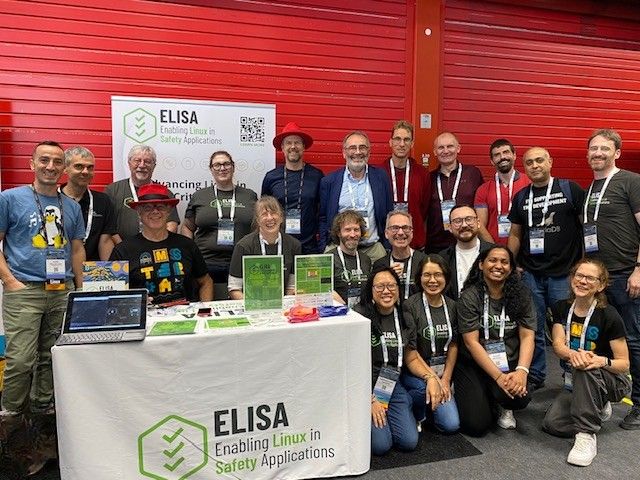
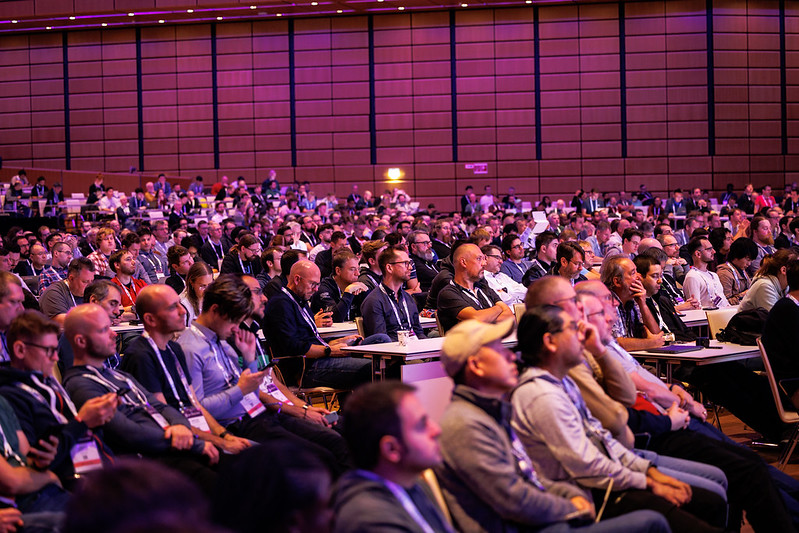
ELISA Project community photo taken at the Open Source Summit Europe 2025

ELISA Booth Highlights

As a Bronze Sponsor, ELISA hosted Booth #29, where attendees learned about safety-critical software and Linux.

Visitors stopped by to:

  • Learn more about ELISA’s mission and latest progress.

  • Explore tools, processes, and working group initiatives.

  • Connect with project members, contributors, and users.

The booth was buzzing throughout the summit, and it was inspiring to see interest from developers across automotive, industrial, medical, and other safety-focused domains.

ELISA in the Safety-Critical Software Summit

ELISA was also featured in the Safety-Critical Software Summit, a focused track within Open Source Summit Europe dedicated to exploring how open source and safety standards intersect. Watch the sessions here.

Sessions covered a wide range of important topics, including:

  • Kernel safety – identifying weaknesses, fault propagation, and ways Linux can evolve as a safety element out of context (SEooC).

  • Automotive innovation – exploring safe software platforms, prototyping frameworks, and open source initiatives for software-defined vehicles.

  • Compliance and trust – practical approaches to continuous compliance, traceability, and the use of statistical methods in safety analysis.

These talks reflected the growing maturity of the ecosystem and highlighted the shared challenges the community is tackling from technical methodologies to regulatory alignment.

Key Takeaways

  • There is strong and growing interest in applying Linux to safety-critical domains, from automotive to medical and industrial applications.
  • Progress in tools, methodologies, and compliance frameworks is enabling broader adoption of open source in regulated environments.
  • Collaboration between industry, academia, and the open source community is essential to tackling safety challenges at scale.
  • The ELISA community continues to expand, fueled by conversations and new contributors who engaged with us in Amsterdam.

Join the ELISA Community

We want to thank everyone who visited us at Booth #29, attended our sessions, and engaged with the ELISA Project at Open Source Summit Europe 2025.

Your questions, feedback, and contributions help shape the future of open source in Linux in safety-critical applications.

If you didn’t get a chance to connect in Amsterdam, it’s not too late!

👋 Thank You, Amsterdam!

From booth conversations to technical discussions, ELISA’s presence at Open Source Summit Europe 2025 was a success thanks to the open source community. We look forward to building on this momentum and continuing the conversation about safety-critical open source systems.

Until next time – see you at the next event!

Documenting the Design of the Linux Kernel - Chuck Wolber, The Boeing Company; Kate Stewart, The Linux Foundaiton; Gabriele Paoloni, Red Hat

Talk Highlights: Documenting the Design of the Linux Kernel – Chuck Wolber, The Boeing Company; Kate Stewart, The Linux Foundation; Gabriele Paoloni, Red Hat

By Ambassadors, Blog, Critical Software Summit, Industry Conference, Safety-Critical Software Summit

Open Source Summit North America, which happened on June 23-25 in  Denver, Colorado, had a total of 1,535 in-person attendees (47% hold technical positions) that represented 732 organizations. This year’s event featured vibrant conversations in the Safety-Critical Software tracksponsored by ELISA Project member Honda.

Safety-critical systems — whether in automotive, industrial, medical, or aerospace — are increasingly adopting open source technologies. The sessions in this dedicated track tackled real-world challenges and shared solutions around functional safety, tool qualification, compliance, and certifiability of open source software.

Highlights included:

  • Panel discussions on bridging the gap between open source innovation and safety assurance

  • Technical deep dives into applying safety analysis methods to Linux-based systems

  • Case studies from the ELISA Project working groups showcasing progress in automotive, medical, and industrial domains

This week we are highlighting the talk “Documenting the Design of the Linux Kernel – Chuck Wolber, The Boeing Company; Kate Stewart, The Linux Foundaiton; Gabriele Paoloni, Red Hat” from the Open Source Summit, North America 2025.

Documenting the Design of the Linux Kernel – Chuck Wolber, The Boeing Company; Kate Stewart, The Linux Foundaiton; Gabriele Paoloni, Red Hat

As Linux adoption grows in safety-critical industries like aerospace and automotive, structured design documentation and traceability become increasingly important. This talk presented the ELISA Project’s efforts to reverse-engineer and document low-level developer intent within the Linux kernel using a new, machine-readable requirements template.

Building on earlier discussions at Linux Plumbers 2024 and the December ELISA Workshop at NASA Goddard, the session outlined a proposed framework for capturing “testable expectations” in line with kernel development norms. The goal is to support pass/fail test development, improve test precision using code coverage, and eventually link low-level requirements to higher-level system design.

The speakers showcased early examples from the kernel’s tracing subsystem, discussed the balance between testability and maintainability, and explained how the effort helps address kernel technical debt and reduce certification barriers. The proposal also seeks to avoid burdening maintainers by decoupling documentation from core development.

Key topics included:

  • A breakdown of the proposed requirement template structure and fields
  • Examples of real-world kernel functions instrumented with low-level requirements
  • Integration plans with KernelCI for test coverage and traceability
  • Challenges encountered, such as avoiding pseudo-code duplication and handling evolving code
  • Community feedback from upstream maintainers and next steps toward broader adoption

To learn more and get involved in the Safety Architecture Working Group, check here.

What’s Next?

We’re excited to continue the conversations sparked at OSSummit through our public working groups, monthly meetings and upcoming events. Join the ELISA Project at Open Source Summit Europe, happening on August 25-27 in Amsterdam, at the Safety-Critical Software Summit. Check out the schedule or visit the ELISA Project ambassadors and leaders at the booth #29. Learn more here.

Learn more about the conference or register for it at the main Open Source Summit Europe page.

For more ELISA Project updates, subscribe to the LinkedIn pageYoutube Channel or join the community on our new Discord channel!

ELISA project at the Open source summit, Europe 2025

ELISA Project at Open Source Summit Europe 2025

By Blog, Industry Conference, Safety-Critical Software Summit

Open Source Summit is the premier event for open source developers, technologists, and community leaders to collaborate, share information, solve problems, and gain knowledge, furthering open source innovation and ensuring a sustainable open source ecosystem. It is the gathering place for open-source code and community contributors.

Why Attend

  • Connect with the people shaping open source
  • Learn from maintainers, architects, and industry leaders
  • Discover new technologies and real-world solutions
  • Collaborate on ideas that move projects forward
  • Grow your skills, your network, and your career

ELISA Project at OSS Europe

We are excited to announce that the ELISA (Enabling Linux in Safety Applications) Project will be participating in the upcoming Open Source Summit Europe, taking place August 25-27, 2025 in Amsterdam, Netherlands.

As a proud Bronze Sponsor of this year’s event, ELISA will also be part of the Safety-Critical Software Summit, one of the focused tracks within Open Source Summit Europe

This is a key opportunity to connect with developers, system architects, functional safety experts, and open source contributors working at the intersection of Linux and safety-critical systems.

What to Expect from ELISA Project at Open Source Summit Europe?

Yes, we have a booth and we would love to see you there!
Stop by Booth #29 to:

  • Learn more about ELISA’s mission and progress
  • See how Linux can support safety-critical systems across industries
  • Explore tools, processes, and working group initiatives
  • Check out live demos
  • Meet with project members, contributors and users
  • Pick up your favourite ELISA branded giveaways

And if you have been following ELISA for a while, you may have noticed we have refreshed our logo!
Come by the booth to grab special edition stickers and updated designs featuring the new logo. Quantities are limited, so be sure to stop by early!

Whether you are in automotive, industrial, medical, or another safety-focused domain, this is a great opportunity to ask questions and see how ELISA might support your work.

ELISA Talks and Sessions

The ELISA Project will also be featured in the Safety Critical Software track sessions. You can find the full schedule information here.

This track explores the intersection of open source and safety standards, covering best practices for regulatory compliance, security updates, and safety engineering. Sessions will delve into requirements traceability, quality assessments, safety analysis methodologies, and technical development for safety-critical systems.

Join the ELISA Community

If you are interested in functional safety or contributing to the project, we would love to have you involved. Learn more.

👋 See You in Amsterdam

The ELISA Project is proud to be part of Open Source Summit Europe 2025 and the growing conversation around safety-critical open source systems. From booth activities to in-depth technical talks, this is a great opportunity to learn, connect, and collaborate.

Don’t forget to stop by Booth #29, attend our talks at the Safety-Critical Software Summit, and meet the people behind the project.

We look forward to seeing you in Amsterdam!

Automated Testing Summit (ATS) 2025

By Blog, Industry Conference

In March, the ELISA Project welcomed KernelCI, a community-based open source distributed test automation system focused on building a collaborative ecosystem around upstream kernel development, to our ecosystem. The primary goal of KernelCI is to use an open testing philosophy to ensure the quality, stability and long-term maintenance of the Linux kernel. The Project is currently working on improved LTS kernel testing and validation; consolidation of existing testing initiatives; quality-of-life improvements to the current service; expanded compute resources; and increased pool of hardware to be tested. Learn more about why they joined the project here.

KernelCI will be hosting the Automated Testing Summit (ATS) 2025 on Thursday, June 26 from 9 am – 5 pm in Denver, Colorado, as part of  Open Source Summit North America. The Automated Testing Summit is a technical conference focused on the key challenges, tools, and infrastructure involved in testing and quality assurance for the Linux ecosystem — with an emphasis on upstream kernel development, embedded systems, cloud environments and CI integration.

Modern software stacks grow increasingly complex and heterogeneous. Ensuring their stability requires scalable, reproducible, and automated testing solutions that can operate across diverse hardware platforms, kernel versions, and integration layers. ATS brings together engineers working on KernelCI, test frameworks, lab automation, CI/CD pipelines, fuzzing, performance analysis, and more.

The event is a platform for in-depth technical talks, demos, and collaboration sessions that tackle real-world problems in automated testing. Topics range from designing interoperable systems for sharing test results, to debugging kernel regressions across distributed hardware labs.

ATS is currently accepting speaking proposals. Submit a proposal here by Sunday, May 18.

How to Register: Pre-registration is required.

To register to attend in-person at Automated Testing Summit 2025, add it to your Open Source Summit North America registration.

To register to attend virtually, please register here.


ELISA Project and Linux Foundation Community Shine at FOSDEM 2025

By Ambassadors, Blog, Critical Software Summit, Industry Conference

Written by Ramon Roche, Dronecode Foundation General Manager and member of Space Grade Linux

Members and collaborators from the ELISA Project and the broader Linux Foundation community were excited to participate in FOSDEM 2025, joining thousands of open source enthusiasts in Brussels for a weekend dedicated to advancing open technology. For those who haven’t yet experienced FOSDEM, it’s difficult to put into words the vibrant, inclusive atmosphere of this registration-free event—it’s something you genuinely have to see and feel for yourself. Imagine developers buzzing between the historic buildings of the Université libre de Bruxelles, eagerly attending talks, sharing ideas, and forging connections over their shared passion for innovation. FOSDEM is more than just a conference; it’s a celebration of open-source collaboration and a testament to the power of community-driven technology.

“FOSDEM is more than just a conference—it’s a cornerstone of the open source world. From discovering new projects in various fields like open source scorecards and NGO-focused CRMs to engaging in critical discussions around the EU’s Cyber Resilience Act, FOSDEM offers unmatched opportunities for learning and collaboration. The hallway track, packed sessions, and the growing interest in AI and open hardware all underscore its role as a vital hub for innovation and community building. It’s where the open source ecosystem thrives, connects, and evolves.”

— Philipp Ahmann, Sr. OSS Community Manager at ETAS GmbH

Exhibits from Sponsors

One of the highlights of FOSDEM 2025 was the lively exhibit area, where attendees flocked to engage with some of the most influential projects and foundations in the open-source ecosystem. The halls were abuzz with energy, making it nearly impossible to walk through without getting swept up in the excitement! Zephyr RTOS had a standout presence among the many exhibits, drawing attention with its innovative real-time operating system solutions. Members of the ELISA community were also actively involved throughout the exhibits, connecting with attendees and sharing insights on safety-critical systems and open-source collaboration.

The FOSDEM community’s love for swag was on full display, with attendees proudly sporting T-shirts, stickers, and other goodies collected from various booths. A major crowd favorite was the Linux Foundation Europe booth, which attracted a steady stream of visitors with its impressive lineup of CNCF project merchandise and exclusive discounts on Linux Foundation training and certifications available only to FOSDEM attendees. The vibrant atmosphere and enthusiasm around the exhibits perfectly captured the spirit of innovation and community that defines FOSDEM.


Kate Stewart’s Zephyr Open Source Project Best Practices Over Time Presentation

Another highlight of FOSDEM 2025 was Kate Stewart’s talk titled Zephyr: Open Source Project Best Practices Over Time, where she shared insights into how Zephyr RTOS has evolved into a robust and widely adopted platform, now surpassing 100,000 commits in its main repository. Drawing on lessons from the Linux Kernel Community, she emphasized the importance of embedding best practices early on to ensure long-term sustainability and scalability. A key focus of her leadership has been security, which was integrated from the start rather than treated as an afterthought. With Zephyr advancing toward formal safety certification, Stewart’s vision continues to drive the project forward, solidifying its position as a trusted solution for embedded systems and safety-critical applications. Her meticulous attention to governance, security, and collaboration has been instrumental in taking Zephyr to new heights.

Software Bill of Materials (SBOM) devroom

The SBOM devroom at FOSDEM 2025 was a focal point for discussions on the growing importance of Software Bill of Materials (SBOM) in ensuring transparency and security across the open-source ecosystem. A standout session was Luigi Pellecchia’s talk on BASIL, an innovative open-source tool designed to simplify the creation and maintenance of traceability matrices for safety-critical applications. Pellecchia demonstrated how BASIL leverages the Software Package Data Exchange (SPDX) standard to integrate quality-related work items into SBOMs, enhancing consistency and reliability across complex toolchains. His presentation highlighted the critical role of SBOMs in fostering trust and compliance, making it clear that tools like BASIL are essential for modern software development workflows. The devroom’s sessions collectively underscored the value of SBOMs in building secure and sustainable software supply chains.

Embedded, Mobile, and Automotive devroom

The Embedded, Mobile, and Automotive devroom at FOSDEM 2025 was a hub of innovation, bringing together a vibrant community of developers and enthusiasts to explore the latest in open-source technologies. The program was packed with engaging talks, covering everything from CubeSat communication systems and general-purpose humanoid robotics with dora-rs to dual A/B update solutions for embedded Linux. Standout sessions included Thibault Poncelet’s deep dive into automotive communication systems with Reverse Engineering CAN Communication and Building ECUs Using Elixir and the BEAM, and Florian Limberger’s exploration of Bluetooth Low Energy applications in Developing BLE Host Applications with Zephyr. Attendees also got a closer look at the integration of MicroPython in embedded systems and enjoyed a lively update on the Zephyr RTOS during its dedicated roasting party. With a full house for nearly every session, the devroom highlighted the rapid advancements in embedded technologies and the critical role of open-source collaboration in shaping the future of the industry.

“FOSDEM is one of the most important open-source gatherings in the world, and this year was no exception,” said Walt Miner, AGL Community Manager at the Linux Foundation, devroom co-chair.  “I came to host the Embedded, Mobile, and Automotive devroom, as well as the Automotive BoF, but it’s also the best place to connect with a wide variety of experts across countless projects. What makes FOSDEM so special is its diversity—it’s not tied to a single project or technology, and every year brings new devrooms and discoveries. This year, I was excited to learn more about OpenPilot and meet some of the people using it.”

Miner continued, “In the Embedded, Mobile, and Automotive devroom, Zephyr was a recurring theme, with so many great talks that we could easily justify a dedicated Zephyr devroom next year. The devroom was a huge success—our 210-seat room was packed for every session, and we had three times more talk submissions than we could accommodate. It’s inspiring to see such enthusiasm and expertise in the community, and I’m already looking forward to next year!”

“Expect the unexpected. At FOSDEM, you have the opportunity to see new topics and trends.”

– Jan-Simon Moeller

Featured Talks you should check out:

BASIL an open source tool that supports requirements traceability with design sBOM

Zephyr: Open Source Project Best Practices Over Time

Safe Systems with Linux (Video)

By Ambassadors, Blog, Industry Conference, Linux Foundation

As Linux is increasingly deployed in systems with varying criticality constraints, distro providers are expected to ensure that security fixes in their offerings do not introduce regressions for customer products that have safety considerations. The key question arises:

  • How can they establish consistent linkage between code, tests, and the requirements that the code satisfies?
  • Which open source tools and specifically for Linux exist to support traceability in order to comply with standards such as ASPICE, ISO26262 or ISO21434?

This video from Open Source Summit Japan – presented by Philipp Ahmann, Sr. OSS Community Manager, Etas GmbH; and Kate Stewart, Vice President of Dependable Embedded Systems at the Linux Foundation – addresses critical challenges in requirements tracking, documentation, testing, and artifact sharing within the Linux kernel ecosystem. Functionality has historically been added to the kernel with requirements explained in the email justifications for adding, but not formalized as “requirements” in the kernel documentation. While tests are contributed for the code, the underlying requirement that the tests satisfies is likewise not documented in a consistent manner. This and further topics will be discussed. Additionally, the results from the “Safe Systems with Linux” micro conference at Linux plumbers will be summarized.


You can watch more ELISA-related talks on the Open Source Summit Japan Playlist on the ELISA Youtube Channel.

A recap of Open Source Summit Europe (Vienna)

By Blog, Industry Conference

Written By Will Stonier, Content Marketing Executive at Codethink and Paul Albertella, ELISA Project TSC member, Chair for Open Source Engineering Process Working Group and Consultant at Codethink

This blog originally ran on the Codethink website. For more content like this, click here

Vienna hosted this year’s European Open Source Summit (OSSEU). Several team members travelled to the ‘City of Music’ to participate in talks and discussions, eat traditional Austrian food, and discuss the future of open source and Linux. The venue was the Austria Center, located in the city’s North East.

OSSEU is one of the bigger events in the open source calendar, with thousands of attendees and a wide array of talks and vendor stands. Moreover, there is a growing number of micro-conferences focussing on topics and domains under the open source umbrella.

Two Codethings presented at OSSEU. Ben Dook’s talk, ‘Real-time Scheduling Fault Simulation,’ examined some methods Codethink has used for fault injection via both user and kernel space in our client work. As part of our work within critical safety, questions frequently arise on how to test processes that rely on real-time scheduling.

Sudip Mukherjee’s talk, ‘Testing, a Journey from Testing Kernels to Testing Debian and Yocto,’ focused on how Sudip started testing the Linux Kernel in a personal capacity and the status of kernel testing as part of his role at Codet hink. You can watch Sudip’s talk here:


However, the conference had something for everyone. For those of the team who focus on open source software in safety and security systems, there was the Critical Software Summit on the first day, and relevant talks on the Embedded Linux track, including one on ‘Linux in Space’ and another on spatial safety in Linux (two very different topics!).

The conference also provided an excellent opportunity for team members to explore Linux kernel topics more deeply. Paul Albertella noted that a talk about power management features was especially helpful, as it drew his attention to the power management of individual devices at runtime as distinct from the system as a whole, helping him navigate tricky nuances of his own laptop!

Here’s what Joshua Zivkovic had to say about Open Source Summit Europe:

“Linux Foundation events, like Open Source Summit EU, provide a way for every corner of the open source world to come together to share innovations, expertise, and experiences amongst the endless number of microcosms of open source.”

Finally, the conference caught the headlines (and caused chatter in the Codethink office) with the announcement that real-time Linux is now officially part of the kernel. This is exciting news, and we’ll be watching how this progresses.

We’ll see you next year!

If you’d like to learn more about the events Codethink attends, please visit our events page.

Related content:

The ELISA Project – Enabling Open Source in Safety-Critical Applications

By Blog, Industry Conference, Safety-Critical Software Summit

Embedded Open Source Summit (EOSS) is an umbrella event for open source embedded projects and developer communities to come together under one roof for important collaboration, discussions and education.  The event is composed of different  micro conferences including Embedded Linux Conference, Zephyr Developer Summit, and Safety-Critical Software Summit.

The Safety-Critical Software Summit took place under the Embedded Open Source Summit, where more than 860 individuals attended in-person at the event with 79% holding technical positions.

At the Safety Summit, Philipp Ahmann, ETAS presented on the ELISA Project, which focuses on enabling open source software in safety-critical applications. The growing need for safety integrity standards in open source projects offers both challenges and opportunities to enhance software quality, particularly in testing, documentation, robustness, and dependability. ELISA aims to be a central hub for safety-critical workloads, collaborating with projects such as Xen, Zephyr, Yocto, and SPDX.

Philipp’s session began with an overview of ELISA’s goals and activities. The focus then shifted to an open discussion on elements, processes, and tools that can enhance trust in open source software for safety, paving the way towards potential certification. The session emphasized the importance of community involvement and collaboration to address the challenges and opportunities in making open source software safety-certifiable.

Key points of the presentation included the focus on various open source projects and their relationship to functional safety. For instance, the Zephyr project integrates safety from the design phase, with premium members having access to comprehensive safety documentation and testing materials. In contrast, Xen prioritizes security and industrial-grade operations, offering rigorous quality processes and strong traceability from initial commit to testing pipelines. Philipp emphasized the importance of community involvement, noting that premium members, like AMD, drive the safety certification efforts for Xen.

The ELISA project distinguishes itself by not directly delivering a “safe Linux,” but by supporting integrators and system creators in making Linux-based systems safety-certifiable. Key members include Red Hat, SUSE, Canonical, Wind River, and Elektrobit, among others. ELISA focuses on creating reproducible systems with CI pipelines that cover documentation, testing, and error detection, enabling users to hook into various stages of the process.

Philipp also discussed the complexity of certifying Linux-based systems due to their inherent flexibility and configurability. He highlighted the challenges of aligning Linux with traditional safety-critical operating systems, which are typically small, fixed, and non-configurable. The presentation also covered the broader scope of ELISA’s work, which includes interactions with various standards bodies and the development of reference systems to demonstrate safety applications.

The ELISA project promotes best practices and aims to ensure that its work is accepted by the open source community. This includes contributions to the Linux kernel and related projects, as well as interactions with other initiatives like CIP and SOAFEE. He also mentioned ongoing efforts to develop use cases and practical applications, such as electric vehicle charging stations and medical devices, to better understand and address the safety needs of different industries.

In conclusion, the ELISA Project is committed to enabling the use of open source software in safety-critical applications through collaboration, comprehensive documentation, robust testing, and continuous improvement. The project seeks to engage the broader community in its efforts, recognizing that the collective expertise and contributions of its members are essential to achieving its goals. The presentation underscored the importance of open communication, shared best practices, and a commitment to safety in driving the project forward.

You can find the presentation slides here

To see all of the videos from the Summit, visit the ELISA Youtube Channel and click on the Safety-Critical Software Summit Playlist


Learn more about the ELISA Project by:

Xen Project’s Progress Toward Safety Certification – Stefano Stabellini, AMD

By Blog, Industry Conference, Safety-Critical Software Summit

Embedded Open Source Summit (EOSS) is an umbrella event for open source embedded projects and developer communities to come together under one roof for important collaboration, discussions and education.  The event is composed of different  micro conferences including Embedded Linux Conference, Zephyr Developer Summit, and Safety-Critical Software Summit.

The Safety-Critical Software Summit took place under the Embedded Open Source Summit, where more than 860 individuals attended in-person at the event with 79% holding technical positions.

embedded open source summit 2024 - ELISA Project

At the Safety Critical Software Summit, Stefano Stabellini, AMD provided a comprehensive update on the Xen Project’s advancements toward achieving safety certification. The Xen Project is an open source, static partitioning hypervisor designed for embedded and automotive applications. It ensures strict isolation between domains, making it a prime candidate for the highest levels of safety certification, such as ISO 26262 for automotive and IEC 61508 for industrial applications.

Stefano detailed the collaborative efforts between AMD and the Xen Community, initiated in 2023, to make Xen safety-certifiable across AMD x86 and ARM architectures. Over nine months, the team has integrated 80% of the relevant MISRA C rules into Xen’s coding standards and resolved numerous MISRA C violations. The introduction of MISRA C checkers into the upstream Xen CI loop has been a critical step in maintaining code quality by preventing new violations from entering the codebase.

The talk emphasized the Xen Project’s rigorous approach to safety certification, highlighting the adoption of a flexible and adaptable MISRA C compliance strategy. This approach included deviating certain MISRA rules that were too restrictive or not entirely applicable to Xen’s mature codebase, while still leveraging MISRA’s robust guidelines to improve code safety and quality.

Stefano also discussed the development of software safety requirements, a key component of the certification process. These requirements are structured hierarchically into market requirements, product requirements, and detailed software safety requirements, each linking to specific tests and traceable through tools like OpenPASS Trace.

The presentation emphasized the importance of integrating MISRA C scanning into the continuous integration (CI) process to detect and address violations early. Additionally, it highlighted the need for using modern tools and methodologies for writing and managing safety requirements, aligning them with open-source community practices.

Stefano concluded by outlining the next steps, including the ongoing upstreaming of safety requirements and further development of the testing infrastructure. 

You can find the presentation slides here.


To see all of the videos from the Summit, visit the ELISA Youtube Channel and click on the Safety-Critical Software Summit Playlist

Learn more about the ELISA Project by:

ELISA Project at embedded world

By Blog, Industry Conference

The world of embedded systems is multifaceted – from hardware and software to services and tools. The embedded world Exhibition & Conference brings the entire embedded community together once a year in Nuremberg and provides a unique overview of the state-of-the-art in this versatile industry.  Last year, the conference hosted 952 exhibitors and 26,630+ visitors from all over the world. This years event, scheduled for April 9-11, is expected to be even larger.

Enabling Linux in Safety Applications (ELISA) Project will be at the event in the Collabora booth (Hall 4- booth 404) with a system demonstrator.

The ELISA System Demonstrator:

  • Heterogenous example system, fully based on Open Source, consisting of Linux, Zephyr (RTOS), and Xen (Virtualization) 
  • Represents recent SW architectures found in industries like Automotive Software Defined Vehicles and Aerospace 
  • Focus on reproducibility as blueprint for future systems 
  • Running on Xilinx Ultrascale ZCU102 and on qemu 
  • GitHub documentation & Gitlab CI 
  • Various use cases documented like device pass through of SD card and NIC, para virtualization of network and different Linux guests