
Open Source Summit North America, which happened on June 23-25 in Denver, Colorado, had a total of 1,535 in-person attendees (47% hold technical positions) that represented 732 organizations. This year’s event featured vibrant conversations in the Safety-Critical Software track, sponsored by ELISA Project member Honda.
Safety-critical systems — whether in automotive, industrial, medical, or aerospace — are increasingly adopting open source technologies. The sessions in this dedicated track tackled real-world challenges and shared solutions around functional safety, tool qualification, compliance, and certifiability of open source software.
Highlights included:
-
Panel discussions on bridging the gap between open source innovation and safety assurance
-
Technical deep dives into applying safety analysis methods to Linux-based systems
-
Case studies from the ELISA Project working groups showcasing progress in automotive, medical, and industrial domains
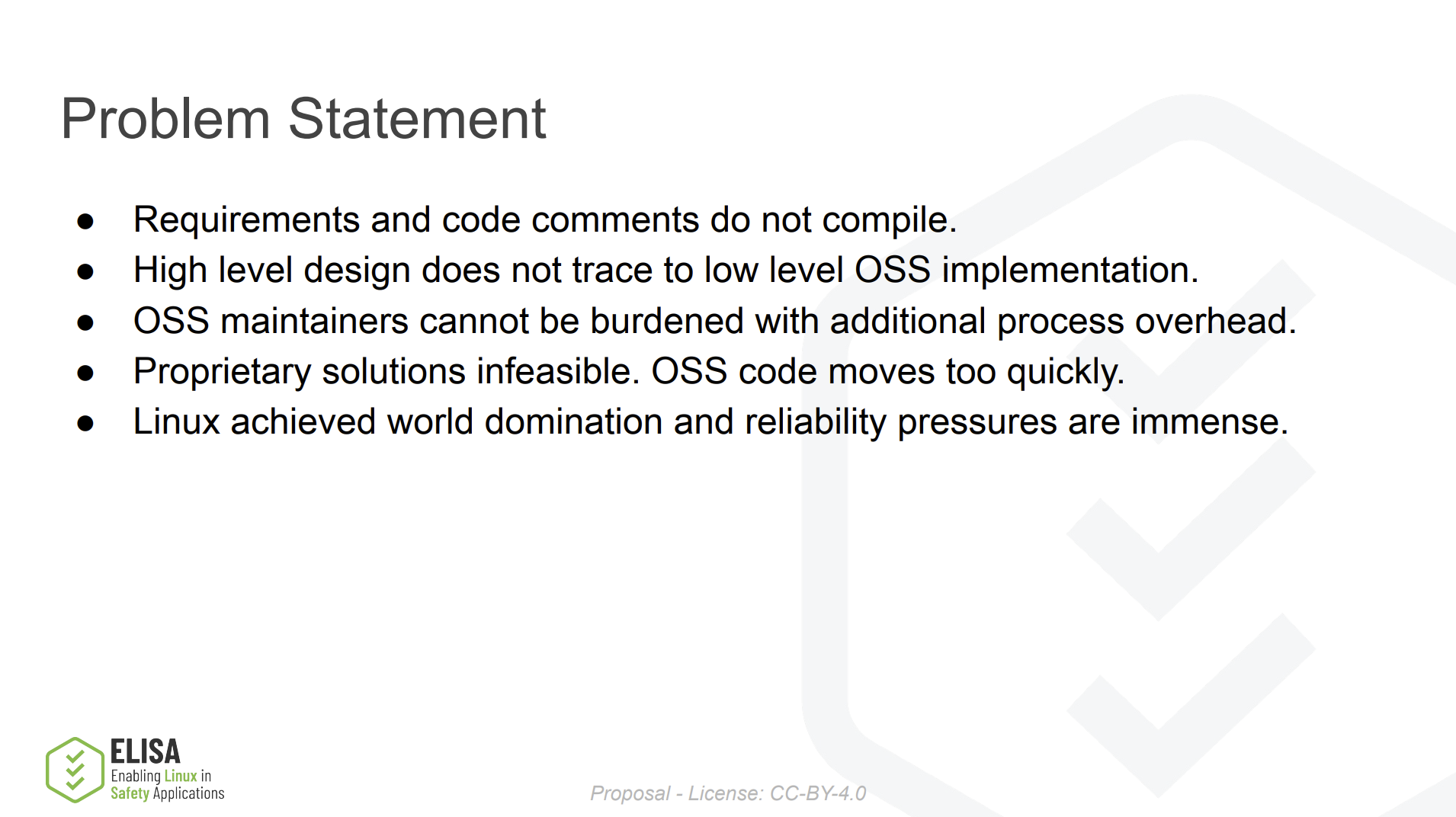
This week we are highlighting the talk “Documenting the Design of the Linux Kernel – Chuck Wolber, The Boeing Company; Kate Stewart, The Linux Foundaiton; Gabriele Paoloni, Red Hat” from the Open Source Summit, North America 2025.
Documenting the Design of the Linux Kernel – Chuck Wolber, The Boeing Company; Kate Stewart, The Linux Foundaiton; Gabriele Paoloni, Red Hat
As Linux adoption grows in safety-critical industries like aerospace and automotive, structured design documentation and traceability become increasingly important. This talk presented the ELISA Project’s efforts to reverse-engineer and document low-level developer intent within the Linux kernel using a new, machine-readable requirements template.
Building on earlier discussions at Linux Plumbers 2024 and the December ELISA Workshop at NASA Goddard, the session outlined a proposed framework for capturing “testable expectations” in line with kernel development norms. The goal is to support pass/fail test development, improve test precision using code coverage, and eventually link low-level requirements to higher-level system design.
The speakers showcased early examples from the kernel’s tracing subsystem, discussed the balance between testability and maintainability, and explained how the effort helps address kernel technical debt and reduce certification barriers. The proposal also seeks to avoid burdening maintainers by decoupling documentation from core development.
Key topics included:
- A breakdown of the proposed requirement template structure and fields
- Examples of real-world kernel functions instrumented with low-level requirements
- Integration plans with KernelCI for test coverage and traceability
- Challenges encountered, such as avoiding pseudo-code duplication and handling evolving code
- Community feedback from upstream maintainers and next steps toward broader adoption
To learn more and get involved in the Safety Architecture Working Group, check here.
What’s Next?
We’re excited to continue the conversations sparked at OSSummit through our public working groups, monthly meetings and upcoming events. Join the ELISA Project at Open Source Summit Europe, happening on August 25-27 in Amsterdam, at the Safety-Critical Software Summit. Check out the schedule or visit the ELISA Project ambassadors and leaders at the booth #29. Learn more here.
Learn more about the conference or register for it at the main Open Source Summit Europe page.
For more ELISA Project updates, subscribe to the LinkedIn page, Youtube Channel or join the community on our new Discord channel!